Fire · Navagunjara Reborn
A god, assembled from nine animals and two continents
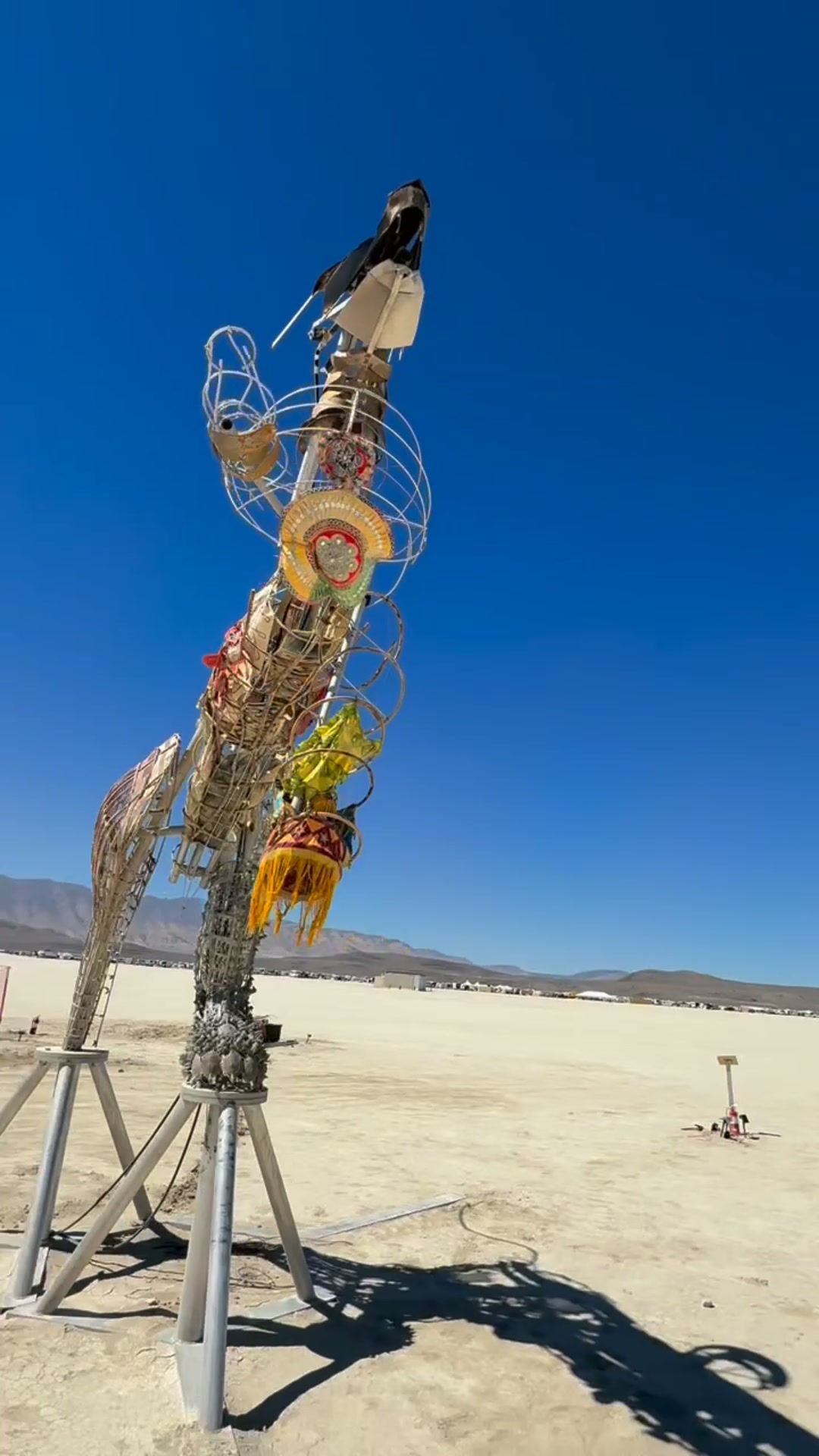
In Odisha's retelling of the Mahabharata, Arjuna meets a creature made of nine animals — rooster, peacock, bull, lion, elephant, tiger, deer, serpent, and a human arm holding a lotus — and must decide whether to shoot or to bow. He lowers his bow. The Navagunjara is the test of whether you can recognize the divine in a form you were never taught to expect.
Navagunjara Reborn fused that figure with the Phoenix and built it at eighteen feet: dhokra lost-wax bronze, bamboo cane, sabai grass, pattachitra painting, Pipili appliqué, and Kotpad textiles from master artisans across Odisha, carried on an aluminum superstructure engineered in Arizona, with flame effects breathing at the head. It was designed in Blender, guided to artisans through 1:1 orthographic templates generated by DeepGIS, scanned back by photogrammetry, and assembled for the first time — never rehearsed, not even partially — on the playa, through three storms.
After the 2025 burn, parts of the sculpture were stolen; others weathered; the surviving crafts stayed under a U.S. temporary importation bond. In 2026 the god returned with a dragon's head of wired aluminum scales, carrying its surviving cane and bronze into a second incarnation. Some saw a dragon, some a tiger, a lion, a gazelle, a dinosaur. The truth, as the myth insists, is multifaceted.
The record, run backward
The film of the 2026 build runs in reverse — from the finished god to the hands that made it. So does this timeline.
-
The god stands, breathes fire, and is released
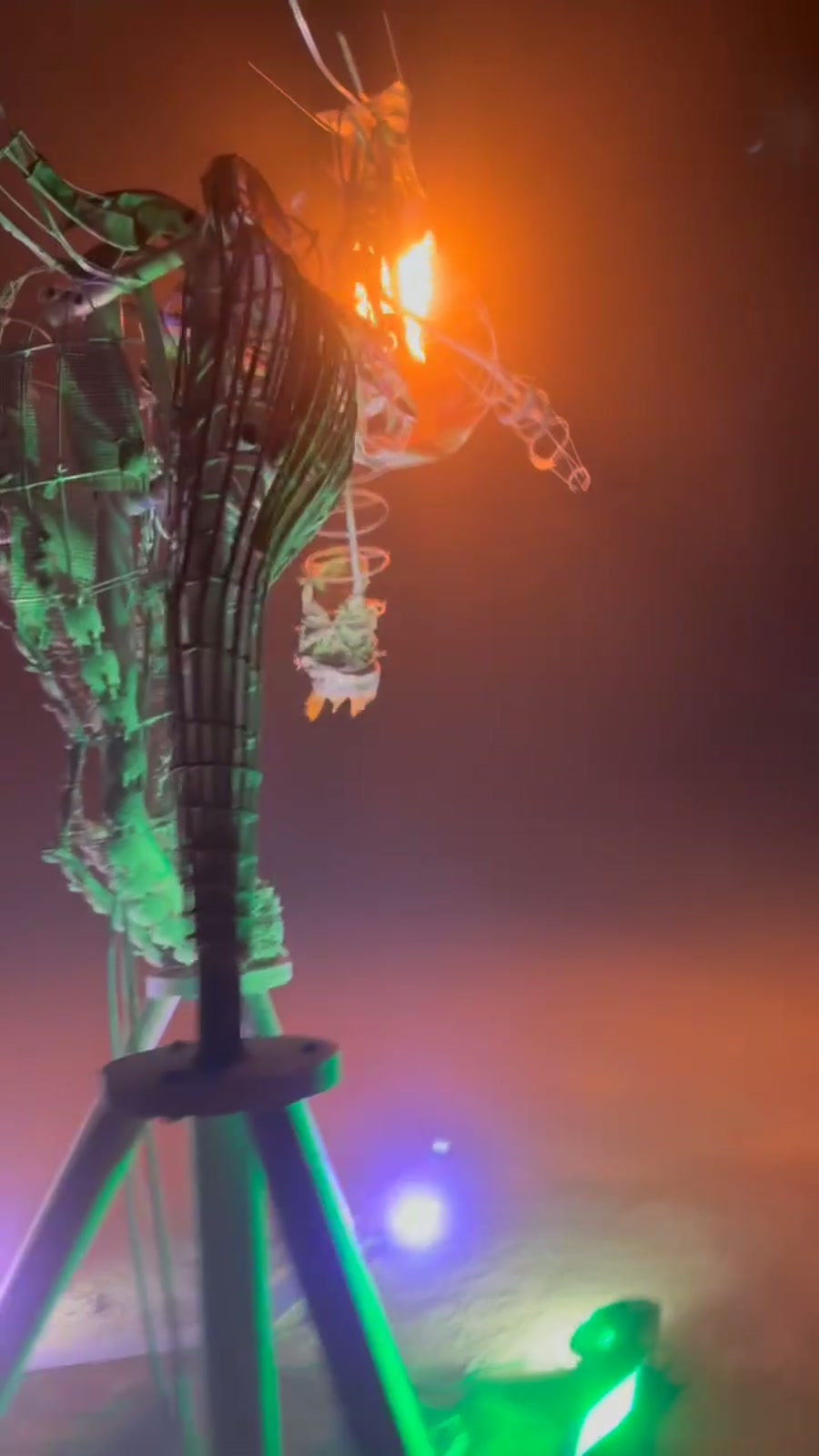
Flame at the head like a carried moon. E-bikes circling at two in the morning. The caption afterward names everyone and mentions no loss.
-
Build week
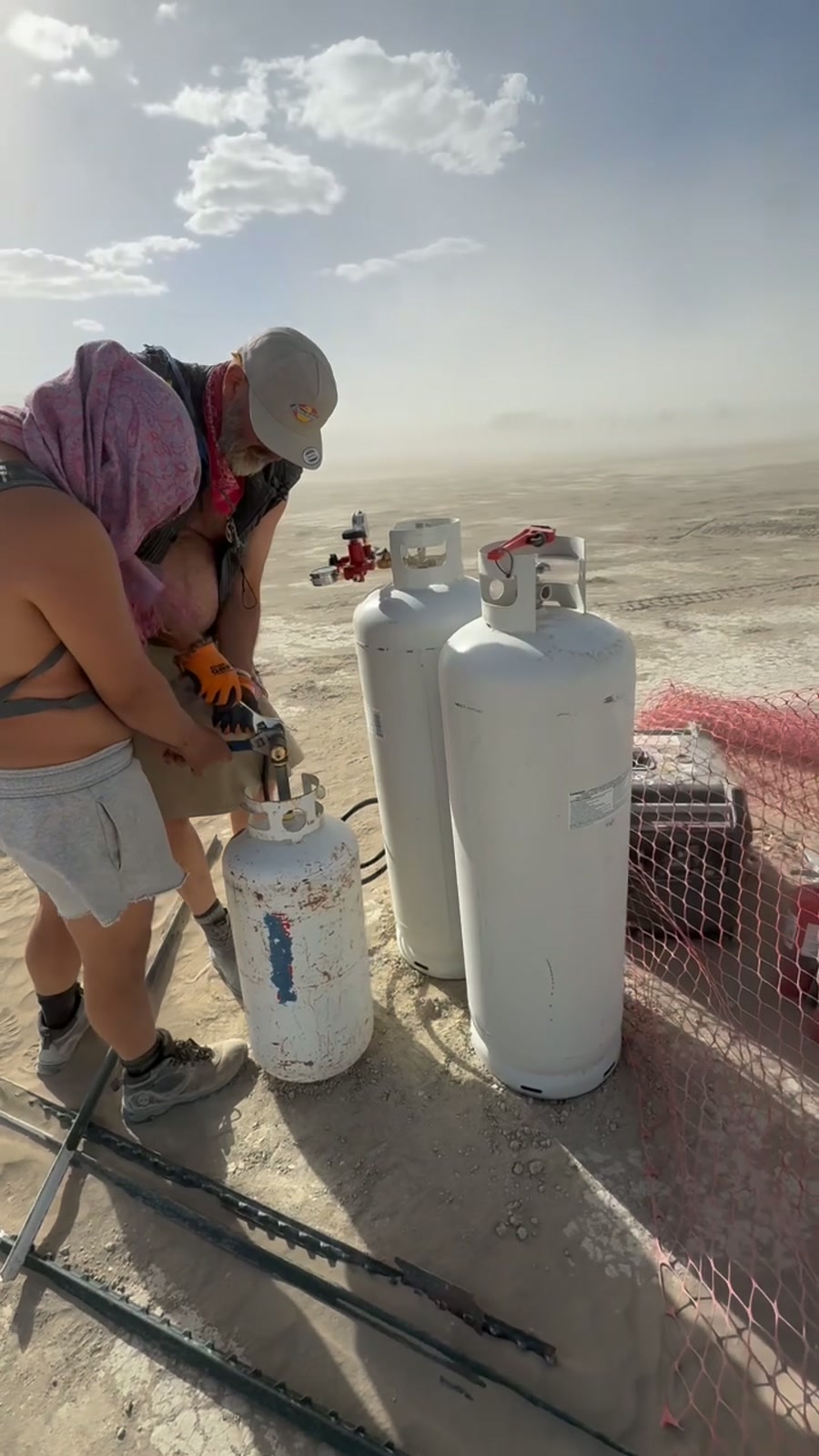
Propane plumbing in a dust storm, a scissor lift, the neighboring art ghosted in the haze. The surviving tigress leg and cane go back up exactly where the customs declaration said they would.
-
A dragon's head, scale by scale
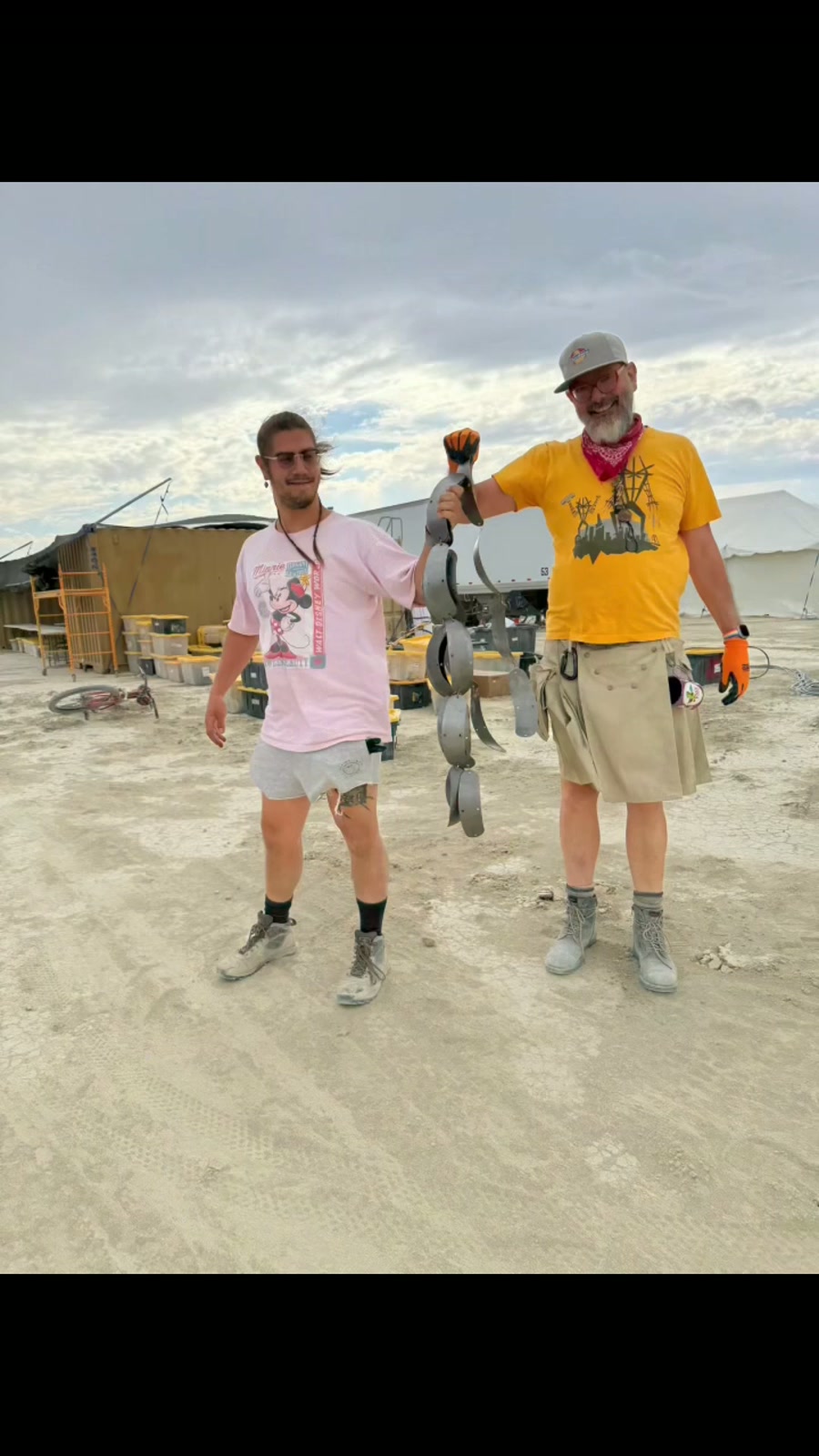
Cut aluminum scales wired into a lattice — the dragon's skin as literal chainmail — and sheet-metal head plates clamped and fitted. The lóng, in Chinese tradition, is itself a composite of nine animals: a nine-in-one head for a nine-in-one god.
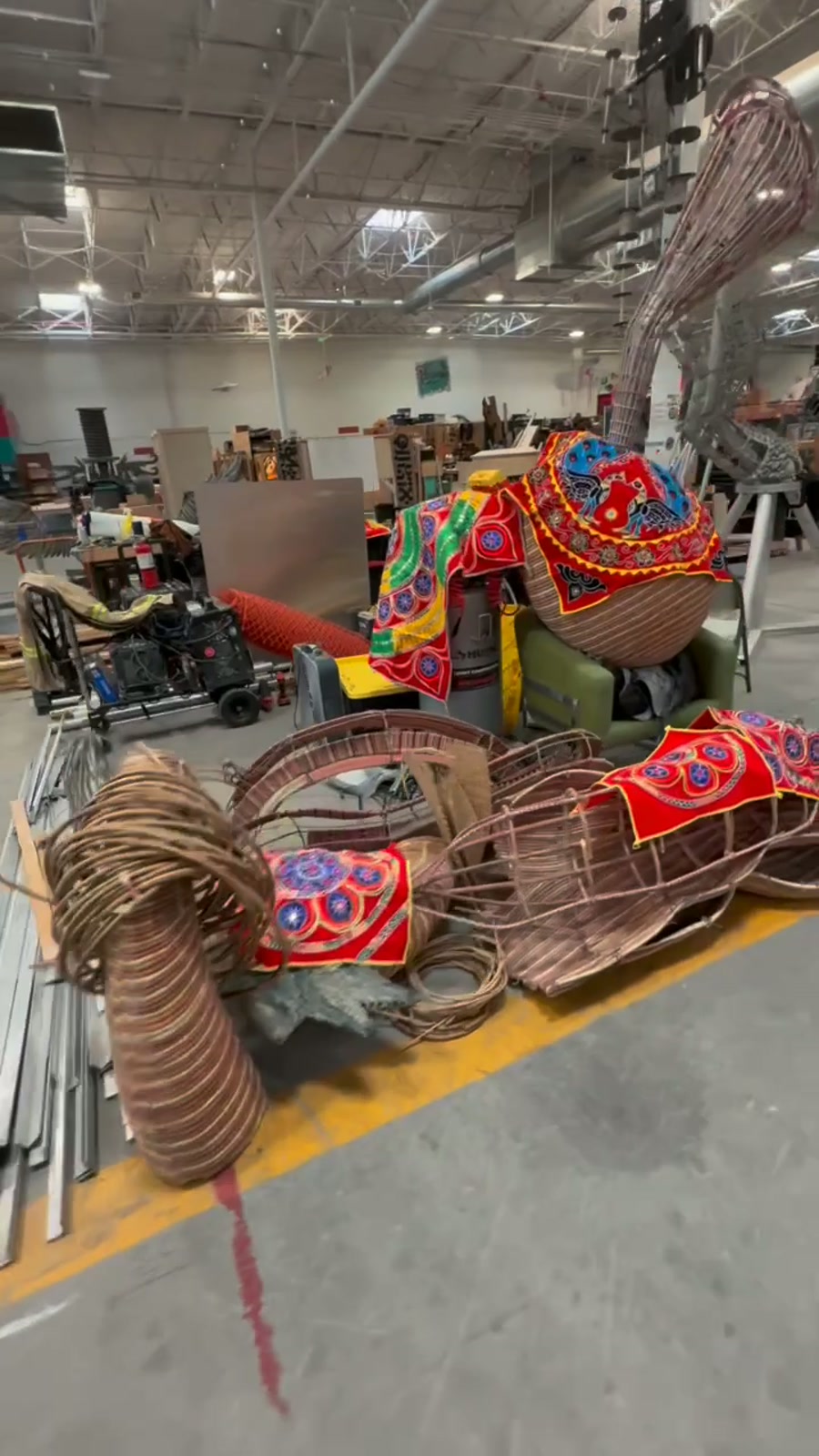
Surviving cane sections and Pipili appliqué staged for reassembly · Reno Generator · 2026 -
The frame goes up again
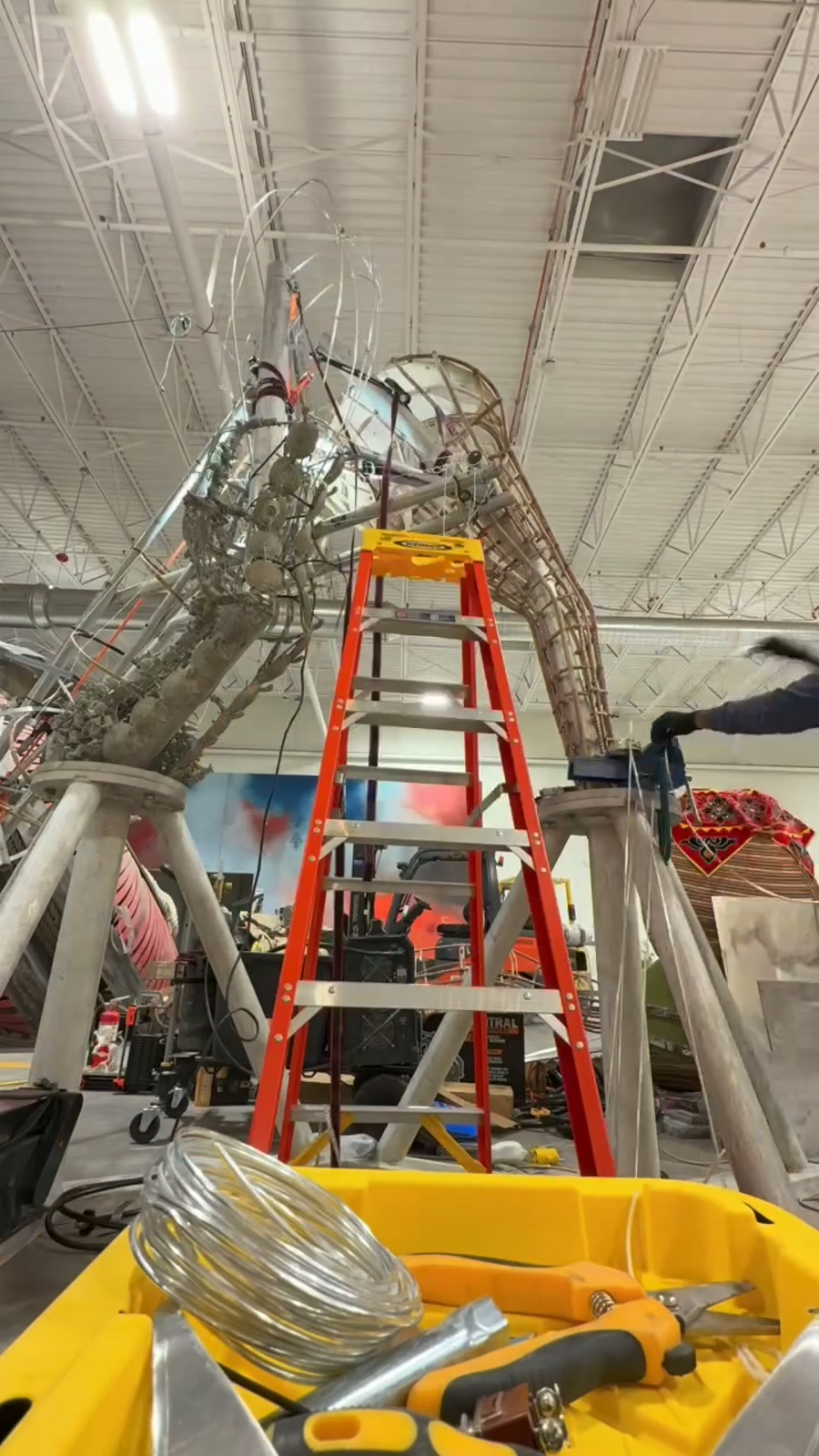
Surviving crafts are reintegrated, lost components re-specified rather than replicated, the aluminum spine rebuilt around what remains. Reincarnation, not restoration: the pattern persists, the body changes.
-
The crafts are made a second time
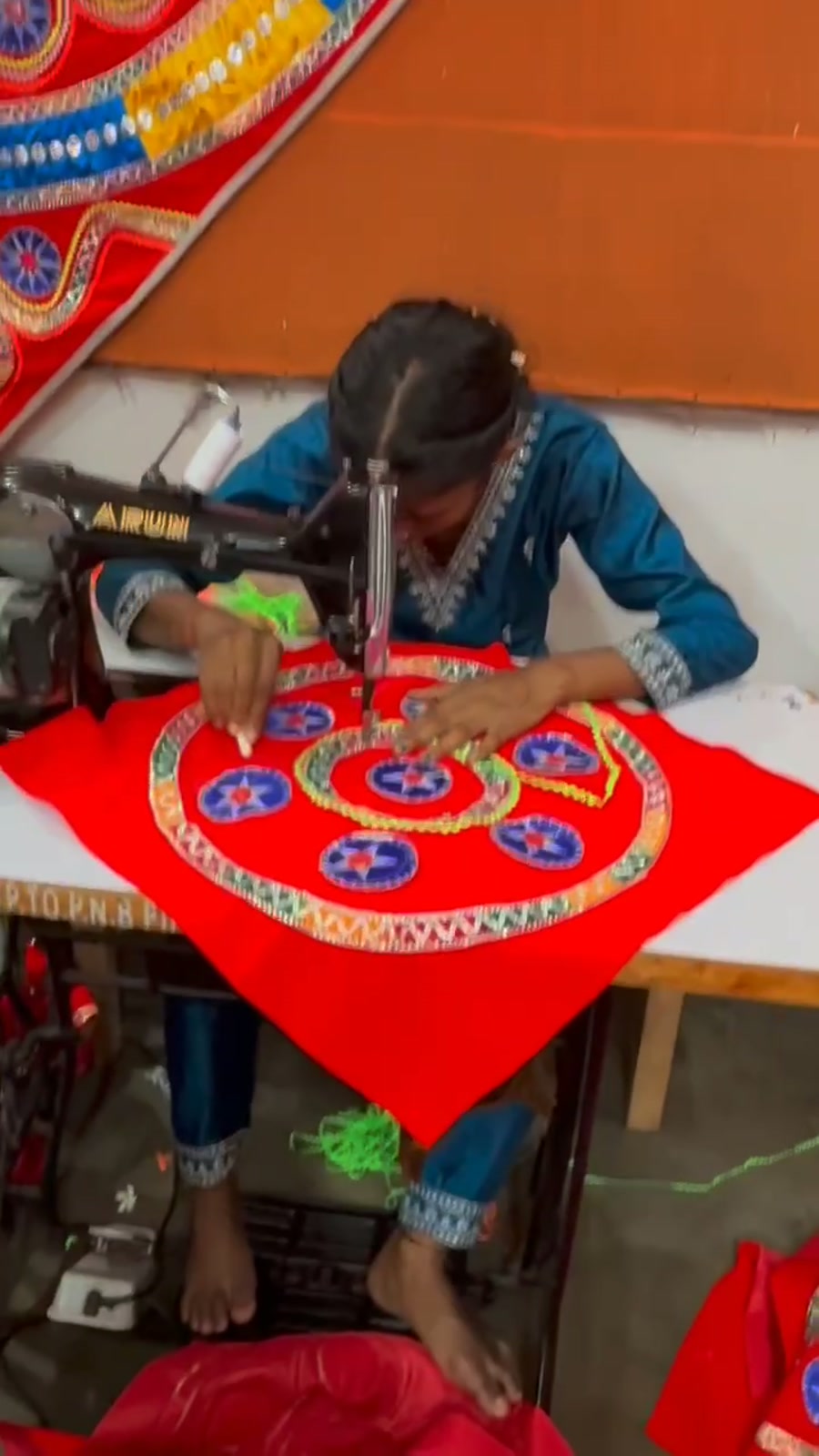
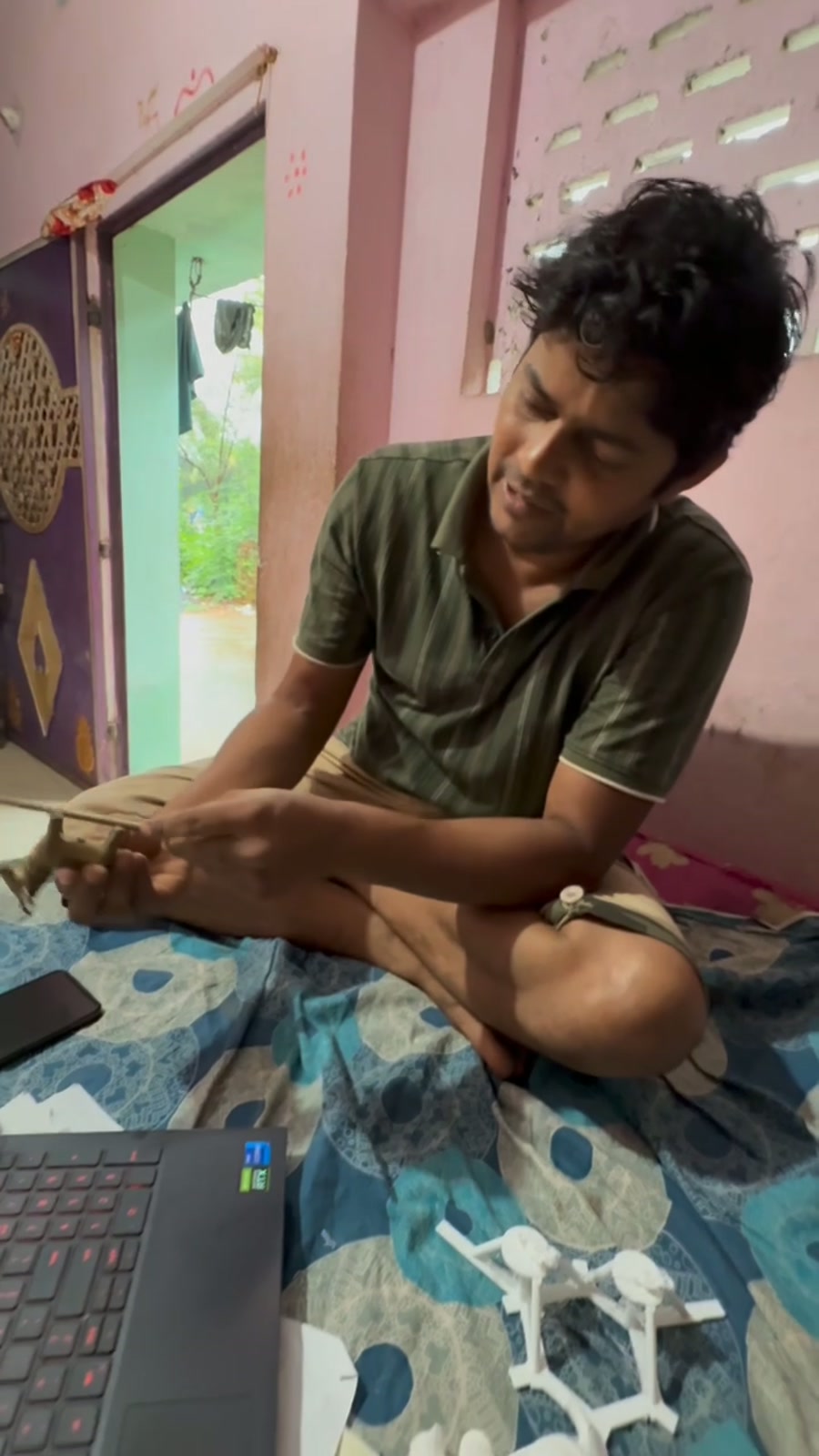
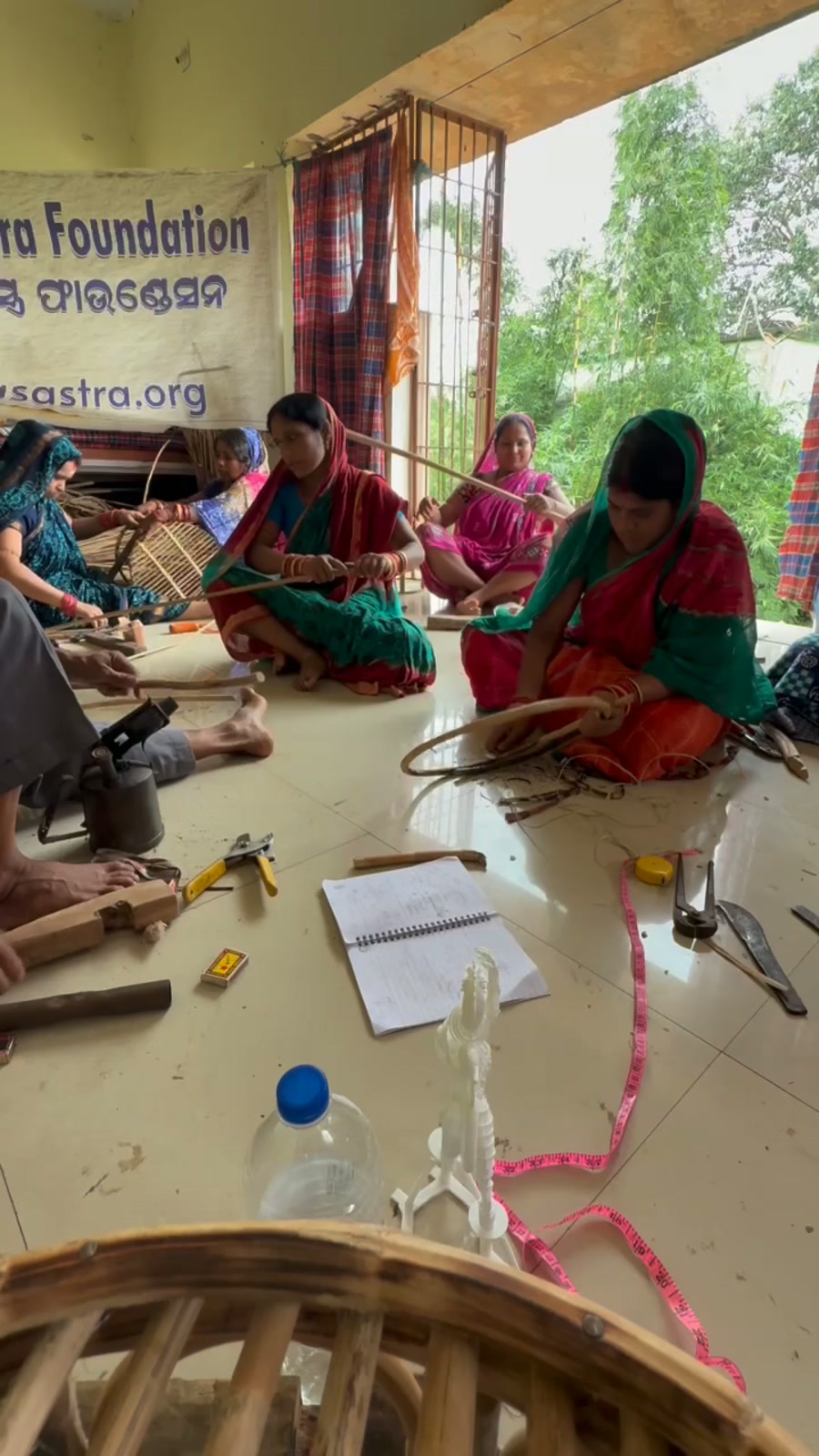
What the theft took, Odisha makes again — appliqué back at the treadle machine, bronze back in the lost-wax mould, cane bent into fresh rings at Kalasastra. The same workshops and the same hands, working a second pass through the same practice rather than copying the first.
-
Theft, storms, and a federal bond
A ninety-minute theft during teardown. A sheriff's report. Flame and weather damage disclosed honestly on every manifest. A customs extension requested with full documentation and granted in a day. The year the god spent as paperwork — all of it kept.
-
First incarnation
One-shot full assembly on playa, 700 feet from The Man, through three storms, with hand tools when the dust made power tools impossible. It stood. Wind through the hollow aluminum made it sing — a sound no one composed.
-
Crates arrive
Air freight from Odisha, each crate labeled with an orthographic print of its own contents. Six weeks to design the superstructure around the artisans' forms rather than forcing the forms to fit the structure.
-
Craft
Pipili appliqué at a treadle machine. Dhokra bronze cast by lost wax and checked against a 3D print on a bedspread. Sabai grass woven over steel wire. Cane bent into rings by hand, with a curvature no CAD tool was asked to specify.
-
Hands
Trace any made thing far enough upstream and you arrive here: a floor, patience, and a plant that grows back whether or not anyone builds a god from it.
Record
-
The 2025 build as paper: workflow, structure, logistics, and the retrospective reading of the sculpture as a maximum-entropy configuration under a product kernel.
-
Engineering Mythology II: Reincarnation as a Design Pattern for Ephemeral Public Art
In preparation — the 2026 incarnation, the interregnum as dataset, and the digital twin as the canonical persistent pattern.
-
Blender tools, FreeCAD truss scripts, and orthographic PDF generation utilities.
-
Essays on the build, the theft, and entropy; the 2026 film, which runs backward.
Names
Everyone who made this exists in the ledger. Lead artisans: Rajesh Moharana (dhokra, metal wireframes) and Ekadashi Barik (cane). Co-artist and India coordination: Richa Maheshwari. 2026 co-leads: Daniel Tulberg and crew; flame effects led by Jordan; build space by Reno Generator; home on the playa with Swing City Monkeys.